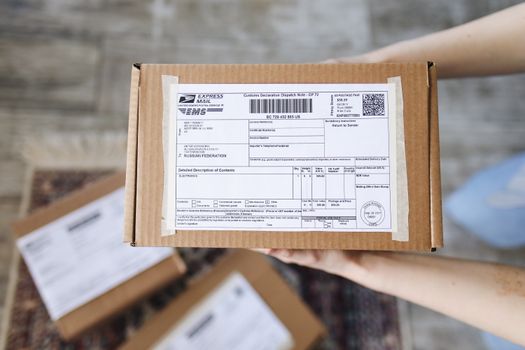
German Export Documentation: Requirements and Process
A German manufacturer ships precision machinery to Brazil, triggering a mandatory customs declaration and specific export license checks before the cargo leaves Hamburg.
Understanding these documentation requirements is critical for German businesses to avoid costly delays, fines, or seized goods. This guide outlines the essential steps, forms, and regulatory checks required for compliant exports from Germany.
Core Export Documents and Declarations
Every export from Germany requires a formal customs declaration. This document serves as the legal basis for the movement of goods out of the European Union. The declaration must be submitted electronically through the ATLAS system, which is managed by the German Federal Customs Administration.
The Export License (Ausfuhrlizenz)
For most standard commercial goods, a specific export license is not required. However, dual-use goods, weapons, and certain technologies subject to sanctions require prior approval. Companies must verify if their product falls under the EU Dual-Use Regulation or national control lists.
If a license is needed, the application is submitted to the Federal Office for Economic Affairs and Export Control (BAFA). Processing times vary significantly based on the complexity of the item and the destination country. Always apply well in advance of the planned shipment date.
The Commercial Invoice and Packing List
The commercial invoice is the primary document for customs valuation. It must include the seller and buyer details, a detailed description of the goods, the quantity, the unit price, and the total value. The currency must be clearly stated, and the Incoterms must be specified to determine who bears the transport costs.
The packing list provides physical details of the shipment. It lists the weight, dimensions, and packaging type for each item. Customs officers use this to verify the cargo against the declaration. Discrepancies between the invoice and packing list often lead to inspections and delays.
Product Classification and HS Codes
Accurate classification of goods is the foundation of export compliance. Every product must be assigned a Harmonized System (HS) code. This six-digit code is international, but Germany often uses an eight-digit code for national statistical purposes.
Determining the Correct HS Code
The HS code determines the applicable export controls and statistical reporting requirements. Misclassification can result in penalties or incorrect duty assessments in the destination country. Companies should consult the Combined Nomenclature (CN) of the European Union to find the correct code.
For complex products, obtaining a Binding Tariff Information (BTI) decision from customs can provide legal certainty. This decision is valid for three years and applies across the EU. It protects exporters from retrospective changes in classification.
Regulatory Categories and Thresholds
Certain goods fall under specific regulatory categories, such as hazardous materials, food products, or pharmaceuticals. These items may require additional certificates, such as a Certificate of Origin or a Phytosanitary Certificate. Thresholds for value also matter; low-value shipments may have simplified procedures, but high-value goods always require full documentation.
Step-by-Step Export Sequence
The export process follows a strict sequence to ensure legal compliance. Starting with internal checks and ending with the release of goods, each step must be completed accurately.
Step 1: Pre-Shipment Verification
Before preparing documents, verify the end-use and end-user of the product. Sanctions lists must be checked to ensure the buyer is not restricted. This due diligence is a legal requirement for German exporters. Failure to check can result in severe criminal liability.
Step 2: Document Preparation
Prepare the commercial invoice, packing list, and any required certificates. Ensure all details match the customs declaration. If an export license is required, attach the license number to the declaration. Digital copies should be stored securely for audit purposes.
Step 3: Customs Declaration Submission
Submit the export declaration via the ATLAS system. This can be done by the exporter or a licensed customs broker. The declaration includes the HS code, value, weight, and destination. Once submitted, customs will process the data and may request additional information.
Step 4: Release and Transport
Upon acceptance, customs releases the goods for export. The exporter receives a release message, which allows the cargo to leave the EU. The transport document, such as a Bill of Lading or Air Waybill, must reference the customs declaration number. Keep all records for at least ten years.
Common Issues and Resolutions
Exporters frequently encounter issues that delay shipments. Understanding these pitfalls can help prevent costly mistakes.
Delays and Rejections
Incomplete or inconsistent documentation is the leading cause of delays. If the HS code does not match the product description, customs may reject the declaration. This requires resubmission, which can take days. Ensure all documents are reviewed by a compliance expert before submission.
Another common issue is incorrect valuation. If the declared value seems too low, customs may suspect undervaluation to evade duties. Provide supporting evidence, such as contracts or payment records, to justify the value. Transparency is key to avoiding inspections.
Appeals and Corrections
If a declaration is rejected, exporters can appeal the decision. This process involves providing additional documentation or clarifying information. It is crucial to respond promptly to customs inquiries. Ignoring requests can lead to fines or the seizure of goods.
For minor errors, a post-clearance amendment can be submitted. This corrects the record without reopening the entire case. However, significant errors may require a new declaration. Always consult with a customs broker for guidance on corrections.
Costs and Timelines
Export documentation involves both direct costs and time investments. Understanding these factors helps in budgeting and planning.
Direct costs include customs broker fees, license application fees, and certification costs. Broker fees vary based on the complexity of the shipment. License applications may have administrative fees, which are set by BAFA. Certificates, such as Certificates of Origin, may charge per document.
Timelines depend on the product and destination. Standard exports can be cleared within hours if documentation is perfect. However, licensed goods may take weeks for approval. Plan for at least two weeks for license applications. Allow extra time for potential inspections or additional queries from customs.
Why This Matters for Importers
While this guide focuses on German exporters, the documentation directly impacts importers. Accurate export documents ensure smooth customs clearance in the destination country. Importers rely on the commercial invoice and certificate of origin to calculate duties and comply with local regulations.
Errors in German export documentation can cause delays at the import port. This leads to storage fees and supply chain disruptions. Clear communication between exporter and importer is essential. Share draft documents early to verify accuracy. This proactive approach prevents issues before the cargo ships.
For more information on international trade compliance, visit the Federal Office for Economic Affairs and Export Control (BAFA). Additionally, the German Customs Administration provides detailed guidelines on export procedures.
To avoid delays, always double-check HS codes, ensure document consistency, and verify sanctions lists. Use a licensed customs broker for complex shipments. Stay updated on regulatory changes, as export rules can evolve. Proactive compliance is the best strategy for successful international trade.